The Black Women Leading Today’s Civil Rights Movements Deserve to Be Front and Center in Tomorrow’s History Books
It’s February, which means many students in history classes across the country are reading chapters dedicated to the Civil Rights Movement in celebration of Black History Month. They’re learning about the contributions of the great Martin Luther King Jr. and Malcolm X. They’re looking at photos of these men giving speeches to the masses and discussing their impact on the world today. In the margins of these pages, they’ll find brief blurbs about Rosa Parks, the defiant older woman who refused to give up her seat, or see a picture of a grieving Coretta Scott King holding her daughter at her husband’s funeral. To reference Beyoncé, the movement was “ran by the men while the women kept the tempo.”
Textbooks of course can’t tell the whole history of that time, but it’s interesting who they choose to highlight and how.
Why were the few Black women who were spotlighted only discussed as maternal figures or wives of changemakers? Why did my textbooks recast these women as secondary characters?
Our textbooks are not immune from the inherent biases present in our culture. Society viewed women solely as mothers and wives, and therefore largely downplayed the breadth of their contributions to the Civil Rights Movement, especially when those contributions fell outside of qualities or actions women were “supposed” to do at the time.
Fast forward 50 years, in a world where women have increased opportunity and access, it’s fascinating to think about how the changes in modern society have recontextualized the role Black women play in civil rights movements. Future historians have an opportunity to reclassify and deepen their representation of Black women in this space.
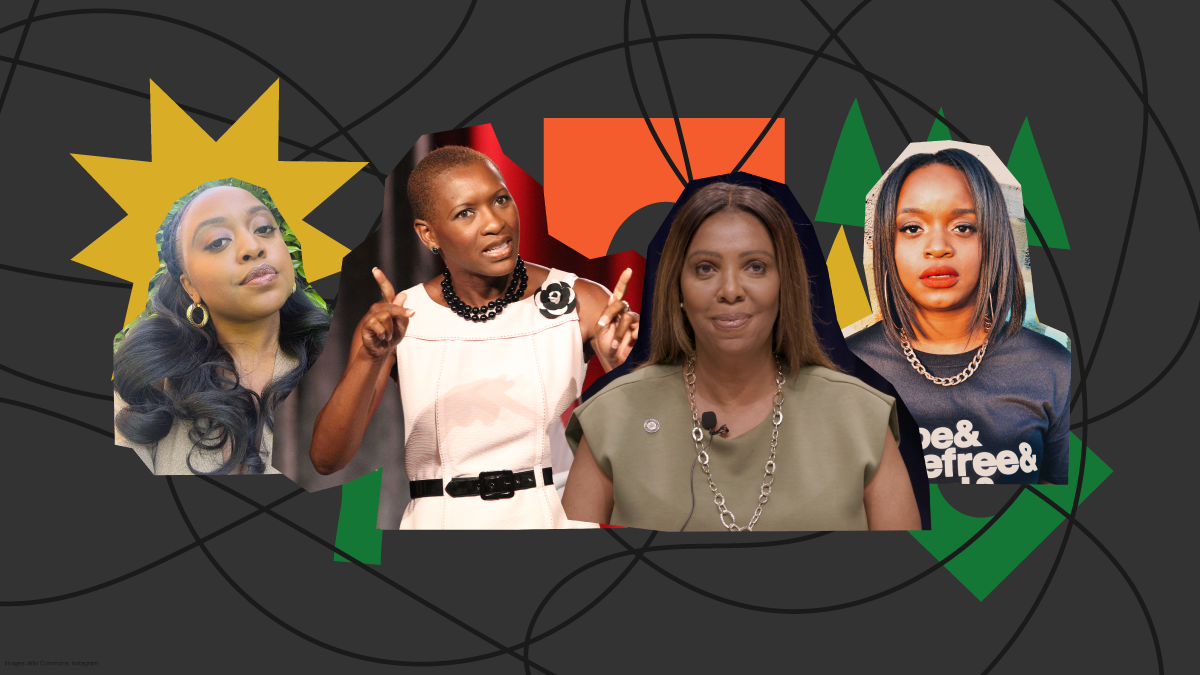
Here are some women making change today and how I hope they will be remembered in future history textbooks:
1. Brittany Packnett Cunningham
Brittany Packnett Cunningham is a former educator turned social justice activist. She began as an elementary teacher before expanding into lead roles at Teach for America. She then served as a Congressional legislative aide before being appointed by President Obama to his Task Force on 21st Century Policing. She assumed this role after becoming a major presence in the Missouri protests fighting for change after the murder of Black teenager Michael Brown at the hands of local police.
Packnett Cunningham is also a founder of Campaign Zero, an organization seeking to end police and bring major reform to how our law enforcement agencies are trained and interact with our communities. She is a frequent contributor to MSNBC, NPR, and other media outlets continuously advocating for Black Americans and calling for an end to Black suffering. She’s also an author, releasing We Are Like Those Who Dream, a collection of speeches by Black women. Packnett Cunningham is a figure that will be remembered for her organizing, advocacy, and efforts to inspire the Black community by uplifting others.
2. Letitia James
Letitia James made history in 2018 as the first Black person elected to serve as Attorney General of New York. Graduate of the historic, storied HBCU Howard University, Letitia James has dedicated her career to public service. She began her career as a public defender with the Legal Aid Society, established an association of professional organizations that provide scholarships for Black children, served on the New York City Council, and even made a run for governor. However, James made headlines for filing AND WINNING(!) a civil lawsuit against Trump and The Trump Organization for defrauding New Yorkers for decades.
In an age where many companies and institutions are avoid holding the Trump administration accountable to avoid retaliation, James is holding steady. She’s been subjected to countless attacks and lawsuits from Trump’s Department of Justice, yet she persists. History will remember her as a woman who fought against a tyrannical regime and carried on in the face of significant threats to her own wellbeing. She did her job when many others wouldn’t. I hope future textbooks highlight the importance of her actions and remind future generations that when facing fascism, it’s crucial to rely on your strengths and do what’s right.
3. Quinta Brunson
Change not only happens in the courtroom or in grassroots organizing, it also happens in our own homes, our own living rooms. Quinta Brunson is a woman who is making societal change through film and television, making her mark on culture and the modern education system. Brunson started out as an internet personality, inadvertently becoming several memes that still dominate our feeds. She then took her talents to the small screen with her role on A Black Lady Sketch Show, making history as part of one of the first comedy sketch shows written, produced, and starring Black women. Now of course, Brunson is most known as the creator, showrunner, producer, and star of ABC’s hit show Abbott Elementary. Spotlighting the joys and issues affecting Philadelphia public schools, through Abbott Elementary Brunson has provided representation for all kinds of educators, showcasing the many ways we can show up for the next generation and make a way out of no way. Shows like Abbott Elementary have a ripple effect on society, helping move the needle in conversations around predominantly Black public schools. Joy is an act of resistance, and through her show Brunson is infusing joy—and change—into households across the country.
4. Claudia Gordon
Finally, I hope the history books of the future do a better job of recognizing the intersectional leaders making systemic changes in our world. One of these leaders is Claudia Gordon, the first deaf Black woman attorney in the U.S.
Claudia has spent her career advising and developing disability employment policy and has worked with multiple administrations advocating for more inclusive policies. Within the Obama administration she served as the Chief of Staff to the Office of Federal Contract Compliance Programs Director in the U.S. Department of Labor, she was later appointed by President Biden to the National Council on Disability.
Claudia is an example of why it is crucial to remember and highlight the importance of understanding intersectionality in an individual’s experience. Black people with disabilities must navigate both racism AND ableism when interacting with systems such as health care, education, and employment. Claudia is an example of intersectional civil rights leadership and reminds us that the Black experience is not singular, and we must respect the full scope of lived experiences.
***
In a world where Black women’s leadership and impact are constantly mischaracterized and downplayed, I’m curious how history will remember today’s leaders and their contributions to society. It is my dream that textbooks will recognize the many ways Black women have led and changed our world for the better. Black women can no longer be relegated to support roles, existing in the margins of history. We’re undeniably front and center.