


The National Women’s Law Center fights for gender justice—in the courts, in public policy, and in our society.

Evonne Kaho

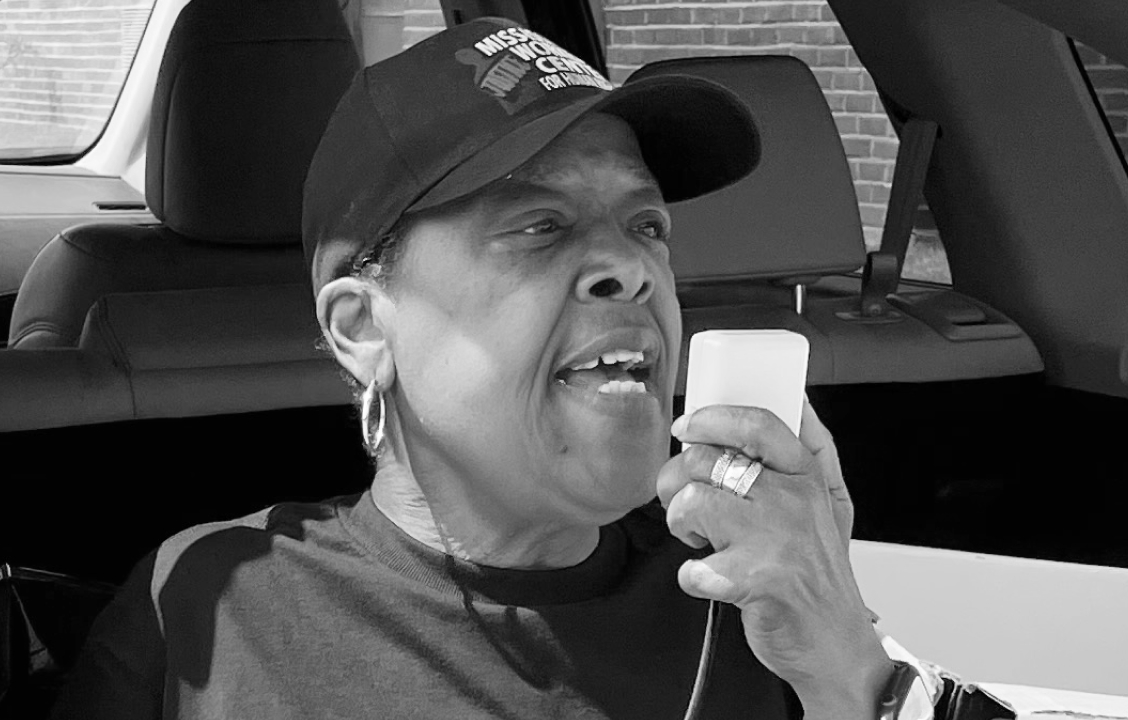
Dr. Evonne Kaho is an activist, educator, and small business owner in Jackson, Mississippi. She is also a survivor of workplace sexual assault. Dr. Kaho is being represented in her civil lawsuit by Jaribu Hill, founder and executive director of the Mississippi Workers’ Center for Human Rights.
Everyone responds differently to sexual violence and abuse, so whatever someone feels is a valid response.
I want people to understand that what happened to me didn’t just happen to my body—it happened to every part of my life. I was violated by a supposed professional—an accountant—someone people trust with their livelihood and sensitive information. But he used that position of trust to hurt me. That betrayal doesn’t just change how you feel about one person; it changes how you move through the world. I became hypervigilant. Supposedly safe professional spaces—offices, conference rooms, meetings—started to feel threatening. I now second-guess myself in rooms I have every right to be in. I look over my shoulder. I calculate exits.
As a Black trans woman living in Mississippi, I already existed in a world that didn’t always recognize my humanity. But finding people who would believe me and systems that would treat my experience as serious became its own ordeal layered on top of the original trauma. My life changed in ways I’m still discovering. Some of those changes I didn’t even notice until I looked back and realized I used to laugh differently. I used to trust differently. I used to walk differently. I’m working on getting that woman back.
Trust has been the mountain I keep climbing.
The isolation is real. I’ve let friendships fade because I lacked the energy to explain what happened or to even answer questions. I also didn’t have the energy to manage someone else’s reaction to pain that I was still drowning in. There were relationships where I pulled back because being close to people felt dangerous, even with people I loved. Navigating systems—legal, medical, and mental health—has also been brutal. These systems were not built with me in mind. Every step of the process required me to fight for my own credibility, to prove that what happened to me was real, to hold myself together while institutions moved slowly, skeptically, and sometimes dismissively. That takes a toll that people on the outside simply cannot see.
I have learned that I didn’t know my own strength.
Before this happened, I knew I was resilient in the way that most Black women—especially most Black trans women—must be, just to survive in this country. But resilience born of survival is different from the strength you discover when the ground falls out from under you, and you somehow, somehow, find a way to stand back up anyway. I learned that I have a voice that doesn’t quit. Even when I wanted to go silent, when silence felt safer, something in me kept speaking. Kept telling the truth. Kept refusing to make my experience small so that other people could be comfortable. I learned that I have a capacity for healing. Every time I thought I had hit a wall, I found a door—a conversation, a therapy session, a quiet moment with someone I love, a prayer. They all cracked something open inside of me I thought was sealed shut. I learned that I am more than what was done to me. I am not this trauma. I am a woman who survived this trauma, and that distinction is something I fight for every single day.
I am deeply loved.
I say that out loud because for a while I forgot it. My mom, my fiancé, my bestie, my aunt, my chosen family, and my attorney have each been a tremendous source of support. My mom has been a pillar—holding space for me without requiring me to perform okayness, showing up without me asking. My aunt, too. The women in my family have wrapped around me and have reminded me of where I come from and how much fight is in my bloodline. My fiancé has loved versions of myself that were hard to love—withdrawn, angry, and so exhausted from carrying this that I had nothing left to give. My bestie also knows the full story, including the ugly parts I haven’t shared in public. And all these people stayed. That kind of love heals. And my chosen family—which is a lifeline for a Black trans woman—has shown me that community is a form of medicine. My attorney and the staff at the Mississippi Workers’ Center took my case seriously, treated me with dignity, and fought for me—that mattered more than they may ever know. Feeling believed inside a system that doesn’t always believe us is transformative.
Prayer keeps me moving forward, even when it’s hard.
On the days when I couldn’t get up, on the days when the weight of what happened felt crushing and permanent, on the days when I looked in the mirror and barely recognized the woman looking back at me, prayer was the thing that created enough space in my chest to take one more breath. I am a woman of faith, and my faith has not required me to be okay, nor rush my healing or pretend I wasn’t hurt. My faith has met me exactly where I am— broken, angry, grieving, scared.I also find resilience in reconnecting with my violated body. For a long time, it felt like enemy territory—something that had been taken from me and that I didn’t know how to live in anymore. Practices like deep breathing, mindfulness, movement—these are ways I am slowly, gently reclaiming my body as mine. That process is sacred. And I protect it accordingly.
Healing looks like reclaiming control of my life— piece by piece, day by day.
It looks like waking up in the morning and making a choice. Any choice. Something as small as what I’m going to wear, or whether I’m going for a walk or who I’m going to call. Agency is medicine. For a long time, that agency was taken from me, and healing has been the slow, intentional process of taking it back. Hope looks like my fiancé’s face across the table. It sounds like my mom’s voice on the phone. It looks like a future that I can see, even dimly— a future where I am not defined by the worst thing that ever happened to me but by everything I chose to do with that experience. Right now, healing also looks like honesty— being willing to say, without shame, that I am not okay, and that I am stronger than I was last year. Both can be true. Healing contains multitudes.
And hope? Hope looks like sharing my story. Because someone else—maybe another Black trans woman in a state that doesn’t see her, much less believe her—might come across my words and know that they are not alone. That is worth everything.