




The National Women’s Law Center fights for gender justice—in the courts, in public policy, and in our society.
Louisiana et al. v. Food and Drug Administration: A case working its way through federal courts poses a dangerous threat to abortion access nationwide.
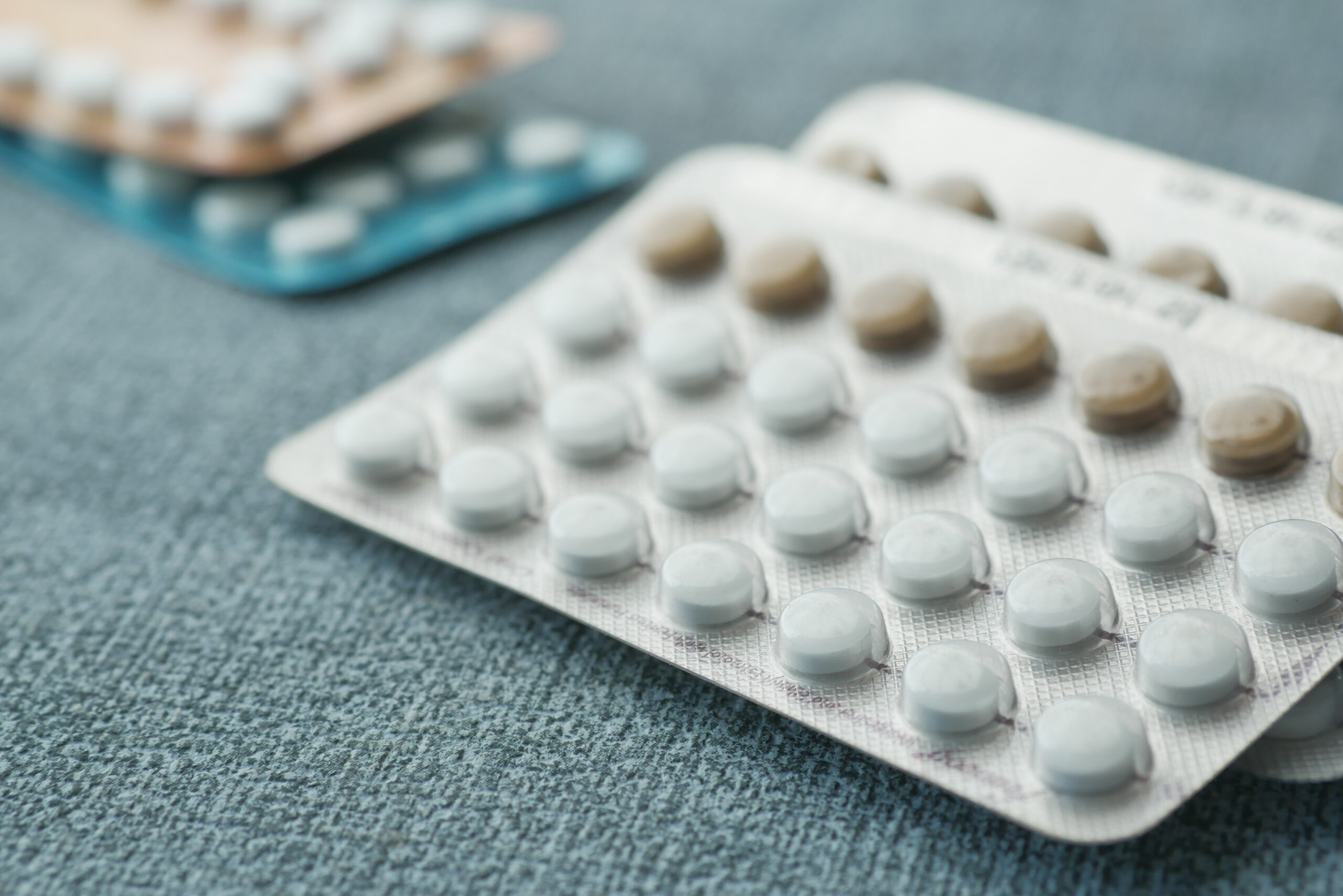
Louisiana et al. v. Food and Drug Administration: A case working its way through federal courts poses a dangerous threat to abortion access nationwide.
A significant case1 currently progressing through federal courts poses one of the most formidable threats to abortion access since the overturning of Roe v. Wade. In Louisiana et al. v. Food and Drug Administration, Louisiana seeks to impose its anti-abortion policies on states nationwide, and the outcome of this case may dictate whether individuals can access medication abortion free from medically unnecessary and ideologically motivated restrictions. This case represents yet another baseless effort to limit access to essential healthcare and will most harm those who are already pushed to the margins.
This case is an attempt by anti-abortion officials of one state to restrict access to medication abortion nationwide.
Louisiana and one individual plaintiff brought this lawsuit to impose a national ban on obtaining the abortion medication, mifepristone, through the mail or at retail pharmacies.2 In other words, Louisiana wants to force every mifepristone patient in the country to travel to a health center just to be handed the pill, even when they have already been thoroughly evaluated and counseled through telehealth and there is no clinical reason for this visit. This lawsuit is a clear attempt by Louisiana to impose its anti-abortion policies on the entire nation.
Mifepristone is one of two medications used in the most common abortion regimen in the U.S., accounting for 63% of all U.S. abortions.3 Because mifepristone has been proven repeatedly, for over twenty-five years, to be safe and effective, including when dispensed via mail or retail pharmacy, the U.S. Food and Drug Administration (FDA) in 2023 permanently eliminated a prior in-person dispensing requirement.4 This evidence-backed action was long overdue, and necessary to support patients’ dignity and right to make their own private medical decisions. It was also crucial to expanding access to abortion care at a time when access to such health care was, and continues to be, significantly threatened.5
In October 2025, Louisiana sued the FDA to overturn the FDA’s action. Among other things, Louisiana claims that the FDA’s action impedes their ability to enforce their own state ban on abortion. Louisiana made the extraordinary request that the court block mail and retail pharmacy access for mifepristone nationwide.6
In April 2026, a federal district court paused the case and rejected Louisiana’s request to reinstate the in-person dispensing requirement throughout the duration of the litigation.7 Louisiana quickly appealed to the Fifth Circuit Court of Appeals—a court known for its hostility toward abortion access—and that court temporarily reinstated the in-person requirement.8 Louisiana got what it wanted: the Fifth Circuit decision immediately restricted access to mifepristone across the country, including in states that protect abortion access, causing significant disruption and chaos for both providers and patients.9
The two pharmaceutical companies that manufacture mifepristone—both of which had already intervened in the case—filed emergency petitions with the U.S. Supreme Court.10 Over the dissents of Justices Clarence Thomas and Samuel Alito, the Court ultimately blocked the Fifth Circuit ruling that banned mail and pharmacy distribution of mifepristone.11 This allows patients and providers to continue accessing the medication through mail and retail pharmacies as the case continues in the lower courts.12
Obtaining mifepristone through mail and retail pharmacies is safe, effective, and critical to ensuring people get the care they need, especially for communities pushed to the margins.
Mifepristone has been a cornerstone of abortion access since approved by the FDA over two decades ago, with extensive research over the past 26 years reinforcing its safety and efficacy.13 More than 7.5 million people in the U.S. have used this medication for abortion and miscarriage management, with a proven 95–99% effectiveness rate for ending early pregnancy.14 As countless studies, peer-reviewed research, and efficacy rating based on outcomes have increased over time, the FDA has continued to eliminate prior unnecessary restrictions on mifepristone, such as the in-person dispensing requirement.15
Telehealth for medication abortion—including mail and pharmacy access—has been available since 202116 and accounted for one in four abortions in the U.S in 2024.17 Telehealth access to mifepristone involves providers working with patients virtually to assess, confirm, and date a pregnancy, prescribe and dispense the medication through the mail or for pickup at a local pharmacy, and provide follow-up counseling as needed.
In the wake of the Court wrongfully overturning Roe v. Wade, access to mifepristone via mail and pharmacy has become crucial to getting people the care they need in the resulting reproductive health care crisis. A study from 2023 revealed that the average American lives 86 miles from an abortion provider making a required in-person visit logistically and financially challenging, and even impossible, for many, even in states where abortion is legal and protected.18 This is especially true for people in rural areas, low-income communities, communities of color, and survivors of intimate partner violence, who already face the steepest barriers to in-person care.19
What Louisiana is advocating—barring patients from obtaining mifepristone by mail and at pharmacies—would impose devastating and medically unjustified burdens on patients’ access to medication abortion.20 Taking away the ability to receive mifepristone in the mail or at the pharmacy would undermine access to abortion and miscarriage care—and patients’ health and autonomy—nationwide.21 It would restore secondary costs—such as travel, missing work, or securing childcare—that often delay or prevent people from getting abortion care.22 And it would compound the national crisis of a shortage of obstetrician-gynecologists and rising rates of pregnancy care deserts and maternal mortality and morbidity.23
This is part of a broader effort by anti-abortion policymakers and extremists to eliminate medication abortion nationwide once and for all.
The anti-abortion movement expected that the Supreme Court’s decision to overturn Roe v. Wade would effectively end abortions —but it has not, and that is largely due to medication abortion access. Consequently, anti-abortion lawmakers and organizations are now aggressively targeting mifepristone.
Louisiana’s case is one of many that have been brought to target mifepristone. It follows another one brought by an anti-abortion organization that sought to overturn the FDA’s approval of mifepristone or severely restrict access to mifepristone by re-instating onerous dispensing requirements, based on junk science and baseless claims.24 That case, Alliance for Hippocratic Medicine v. FDA (2024), already went to the Supreme Court, where it was dismissed for lack of standing.25 Similarly, the Louisiana case is fundamentally flawed and should have been dismissed from the start.26
Missouri, Kansas, and Idaho intervened in the case before it was dismissed and are now continuing to press forward with the case, seeking to impose a range of unnecessary and burdensome restrictions, including the prior in-person dispensing restrictions, on mifepristone access.27 Additionally, Texas and Florida initiated a lawsuit in December 2025 challenging the FDA’s original approval of mifepristone from 2000, as well as subsequent approvals and regulations facilitating access to mifepristone.28
Contrary to standard practice, the federal government under the Trump administration has not defended the FDA’s actions in these cases. It did not weigh in during the Supreme Court or Fifth Circuit deliberations in Louisiana v. FDA. Instead, the Trump administration merely requested that the court delay its ruling on this case until the conclusion of a “review” of mifepristone being undertaken by the FDA. The review is politically motivated; it was demanded by anti-abortion organizations who want the Trump FDA to reverse its prior approval of mifepristone.
The pressure from anti-abortion organizations on the Trump administration has been so relentless that it reportedly led to the former FDA commissioner, Marty Makary, resigning before being fired by President Trump in part for not doing enough to restrict access to mifepristone.29 The interim FDA commissioner, Kyle Diamantas, has gone so far as to reassure anti-abortion groups of his commitment to their agenda,30 and Trump’s current pick to lead the FDA, Dr. Heidi Overton, has a clear anti-abortion record, including criticizing the FDA’s decision to allow mifepristone to be dispensed by mail and retail pharmacy and repeating false information about the safety of mifepristone.31 During his confirmation hearing, the nation’s top law enforcement official, Attorney General Todd Blanche, expressed his agreement with restricting access to medication abortion and said that the decision to make abortion pills available via mail and pharmacy was “wrong.”32 He is now under pressure from anti-abortion policymakers to “resolve” the Louisiana v. FDA case and impose in-person dispensing for mifepristone nationwide.33
While this plays out in the courts and at the federal level, anti-abortion state legislators are also moving to restrict access to medication abortion. In 2025, 89 bills attacking medication abortion were introduced across 27 states.34 At the midpoint in the 2026 legislative sessions, 21 states have introduced 58 bills that would criminalize the sale, purchase, or distribution of medication abortion, and four of these have been enacted.35
These relentless assaults on access to safe and effective medication abortion are part of a coordinated attack on dignified access to necessary reproductive healthcare. But the truth remains: mifepristone is safe, effective, and critical to ensure care, and it must be available to all who need it, allowing them to make their own decisions about their bodies, lives, and futures.
Find the factsheet here.
1 Danco Laboratories, LLC v. Louisiana, No. 25A1207, slip op. (U.S. May 14, 2026); GenBioPro, Inc. v. Louisiana, No. 25A1208, slip op. (U.S. May 14, 2026), https://litigationtracker.law.georgetown.edu/litigation/state-of-louisiana-et-al-v-food-and-drug-administration-et-al/; see also NWLC and More Than 100 Other Reproductive Rights, Health, and Justice Organizations Join Amicus Brief Defending Access to Mifepristone, NWLC (last accessed Aug. 27, 2026), https://nwlc.org/resource/nwlc-and-more-than-100-other-reproductive-rights-health-and-justice-organizations-join-amicus-brief-defending-access-to-mifepristone/.
2 Laurie Sobel et al., Louisiana v. FDA: Access to Mifepristone Back at the Supreme Court, KFF (May 6, 2026), https://www.kff.org/womens-health-policy/louisiana-v-fda-access-to-mifepristone-back-at-the-supreme-court/.
3 Rachel K. Jones & Amy Friedrich-Karnik, Medication Abortion Accounted for 63% of All US Abortions in 2023—An Increase from 53% in 2020, Guttmacher Inst. (Mar. 2024), https://www.guttmacher.org/2024/03/medication-abortion-accounted-63-all-us-abortions-2023-increase-53-2020.
4 Mifepristone was initially subject to FDA REMS restrictions, including in-person dispensing until FDA temporarily suspended the in-person requirement in 2021 during the COVID-19 pandemic. After continued evidence of safety and effectiveness, FDA permanently eliminated in-person dispensing in 2023. U.S. Food & Drug Admin., Questions and Answers on Mifepristone for Medical Termination of Pregnancy Through Ten Weeks Gestation, https://www.fda.gov/drugs/postmarket-drug-safety-information-patients-and-providers/questions-and-answers-mifepristone-medical-termination-pregnancy-through-ten-weeks-gestation (last visited Aug. 14, 2026).; see also The Biden Administration Takes Action to Protect Reproductive Health, NWLC (January 20, 2023), https://nwlc.org/resource/the-biden-administration-takes-action-to-protect-reproductive-health/; see also Alexandra Thompson et al., The disproportionate burdens of the mifepristone REMS, 104 Contraception 16, 16-19 (2021), https://www.sciencedirect.com/science/article/abs/pii/S0010782421001487.
5 Memorandum on Further Efforts To Protect Access to Reproductive Healthcare Services, 88 Fed. Reg. 4895 (Jan. 26, 2023), https://www.govinfo.gov/content/pkg/DCPD-202300046/pdf/DCPD-202300046.pdf; Usha Ranji et al, Key Facts on Abortion in the United States, KFF (Jan. 7, 2026), https://www.kff.org/womens-health-policy/key-facts-on-abortion-in-the-united-states/?entry=table-of-contents-what-does-research-show-about-the-safety-of-abortions. More than 85% of pregnancy-related deaths are preventable. Stephani Psaki, A Dangerous Shift in Maternal Health Policy, Time (April 30, 2026), https://time.com/article/2026/04/29/a-dangerous-shift-in-maternal-health-policy/; Dr. Celine Grounder, The Quiet Collapse of America’s Reproductive Health Safety Net, CBSNews (Oct. 30, 2025), https://www.cbsnews.com/news/reproductive-health-trump-administration-hhs-cuts/.
6 Complaint, State of Louisiana ex rel. Murrill v. U.S. Food & Drug Admin., No. 6:25-cv-01491, 2025 WL 4354605 (W.D. La. ___, 2025); https://litigationtracker.law.georgetown.edu/wp-content/uploads/2025/10/State-of-Louisiana_2025.10.06_COMPLAINT.pdf.
7 Louisiana v. FDA, 2026 U.S. Dist. LEXIS 75860 at *48 (W.D. La. 2026),
8 On May 1, 2026, the Fifth Circuit granted Louisiana’s request, temporarily reinstating the in-person dispensing requirement and threatening access to medication abortion nationwide. Louisiana v. FDA, 2026 U.S. App. LEXIS 12760 at *20 (5th Cir. 2026).
9 Dierdre McPhillips, ‘Chaos’ Followed Ruling on Abortion Drug Access, and Providers Say More Uncertainty Lies Ahead, CNN (May 6, 2026), https://www.cnn.com/2026/05/06/health/abortion-providers-mifepristone-chaos-court.
10 On May 2, 2026, Danco Laboratories and GenBioPro petitioned the U.S. Supreme Court to stay the Fifth Circuit’s ruling. The Supreme Court paused the Fifth Circuit’s order on May 4, temporarily restoring mail and pharmacy access to mifepristone. On May 14, 2026, the Court extended this temporary order, blocking the ruling that banned mail and pharmacy distribution of mifepristone as the case makes its way through the courts. Danco Laboratories, LLC v. Louisiana, No. 25A1207, slip op. (U.S. May 14, 2026).
11 Justice Thomas argued that shipping mifepristone is a crime, attempting to manipulate a law from 1873 known as the Comstock Act; Justice Alito argued that this is a “scheme” to undermine the Supreme Court’s Dobbs decision because it allows medical providers, organizations, and other states to subvert Louisiana’s decision to ban abortion. Danco Laboratories, LLC v. Louisiana, 146 S. Ct. 1192, 1193-96 (2026); Danco Laboratories, LLC v. Louisiana, No. 25A1207, slip op. (U.S. May 14, 2026); GenBioPro, Inc. v. Louisiana, No. 25A1208, slip op. (U.S. May 14, 2026), https://www.supremecourt.gov/opinions/25pdf/25a1207_21p3.pdf.
12 The Supreme Court’s stay of the Fifth Circuit ruling will remain in effect until after the Fifth Circuit reaches another decision and even after that, will stay in place until the Supreme Court decides whether to hear the case again or after it issues a ruling if it decides to take up the case. GenBioPro, Inc. v. Louisiana, No. 25A1208, slip op. (U.S. May 14, 2026), https://www.supremecourt.gov/opinions/25pdf/25a1207_21p3.pdf.
13 First approved in 2000 after a nearly five-year scientific review, mifepristone has been involved in over 600 clinical trials, included in more than 900 medical reviews, and is used in over 100 countries, Mifepristone Approved List Gynuity Health Projects, (updated May 2024), https://gynuity.org/assets/resources/mife_by_country_and_year_en.pdf. Trials based on a review of publications on PubMed. NWLC and More Than 100 Other Reproductive Rights, Health, and Justice Organizations Join Amicus Brief Defending Access to Mifepristone, at page 5 FN 8*, NWLC (last accessed June 5, 2026), https://nwlc.org/resource/nwlc-and-more-than-100-other-reproductive-rights-health-and-justice-organizations-join-amicus-brief-defending-access-to-mifepristone/; ANSIRH, Analysis of Medication Abortion Risk and the FDA report “Mifepristone US Post-Marketing Adverse Events Summary through 12/31/2024” (2025) (explaining how recent studies indicate that serious complications from mifepristone use are exceedingly rare, with fewer than 40 recorded deaths out of over 7.5 million uses, and none certainly causally linked to mifepristone); https://www.ansirh.org/sites/default/files/2025-05/Issue%20Brief%20MAB%20SAEs-May2025%20Final_0.pdf
14 See U.S. Food & Drug Admin., Mifepristone U.S. Post-Marketing Adverse Events Summary, https://www.fda.gov/media/185245/download (last visited 8/14/26); M. Gatter, K. Cleland & D.L. Nucatola, Efficacy and Safety of Medical Abortion Using Mifepristone and Buccal Misoprostol Through 63 Days, 91 Contraception 269 (2015), https://doi.org/10.1016/j.contraception.2015.01.005.
15 Brief as Amici Curiae of Former Commissioners and Acting Commissioners of the U.S. Food & Drug Administration in Support of Applications by Danco and GenBioPro to Stay or Vacate the Fifth Circuit’s Stay Pending, Danco Laboratories, LLC v. Louisiana, No. 25A1207, slip op. (U.S. May 14, 2026); GenBioPro, Inc. v. Louisiana, No. 25A1208, slip op. (U.S. May 14, 2026), https://www.supremecourt.gov/DocketPDF/25/25A1208/408086/20260505151315785_2026-05-05%20FINAL%20LA%20v.%20FDA%20Amicus%20Br.pdf; Abortion in the United States, Guttmacher, (March 2026), https://www.guttmacher.org/fact-sheet/induced-abortion-united-states (last accessed 5/26/26). Despite having a better safety record than many common medications like Viagra, penicillin, and acetaminophen (Tylenol), mifepristone was subject to stricter regulations than medications with similar risk profiles, including the in-person dispensing requirement, which barred mail and pharmacy access. ANSIRH, Analysis of Medication Abortion Risk and the FDA report “Mifepristone US Post-Marketing Adverse Events Summary through 12/31/2024″, https://www.ansirh.org/research/brief/analysis-medication-abortion-risk-and-fda-report-mifepristone-us-post-marketing (last accessed on Aug. 27, 2026).
16 After temporary suspension of the in-person dispensing requirement in 2021 due to the COVID-19 pandemic proved safe and successful, the FDA ultimately lifted the in-person dispensing requirement in January 2023, based on overwhelming evidence that at-home use of mifepristone is safe, effective, and significantly bridges gaps in access resulting from our current reproductive health care crisis. U.S. Food & Drug Administration, Questions and Answers on Mifepristone for Medical Termination of Pregnancy Through Ten Weeks Gestation, https://www.fda.gov/drugs/postmarket-drug-safety-information-patients-and-providers/questions-and-answers-mifepristone-medical-termination-pregnancy-through-ten-weeks-gestation (last accessed Aug. 27, 2026).
17 Society for Family Planning, #WeCount Report: April 2022 to December 2024 (2025), https://societyfp.org/research/wecount/wecount-december-2024-data (last visited Aug. 14, 2026).
18 Brief of 163 Reproductive Health, Rights, & Justice Organizations as Amici Curiae in Support of Applicants, Danco Laboratories, LLC v. Louisiana, No. 25A1207, slip op. (U.S. May 14, 2026); GenBioPro, Inc. v. Louisiana, No. 25A1208, slip op. (U.S. May 14, 2026), at 10 https://nwlc.org/wp-content/uploads/2026/02/2025.05.07-Louisiana-v.-FDA-Supreme-Court.pdf (citing to Selena Simmons-Duffin & Shelly Cheng, How Many Miles Do You Have to Travel to Get Abortion Care? One Professor Maps It, NPR (June 21, 2023), https://www.npr.org/sections/health-shots/2023/06/21/1183248911/abortion-access-distance-to-care-travel-miles#).
19 Brief of 163 Reproductive Health, Rights, & Justice Organizations as Amici Curiae in Support of Applicants, Danco Laboratories, LLC v. Louisiana, No. 25A1207, slip op. (U.S. May 14, 2026), at 11–14; https://nwlc.org/wp-content/uploads/2026/02/2025.05.07-Louisiana-v.-FDA-Supreme-Court.pdf.
20 Id. at 2, 6.
21 Id. at 16–18.
22 Id. at 11–13.
23 Id. at 17; see also NWLC, New Report Reveals How Abortion, Pregnancy Care, Broadband Internet, and Food Deserts Are Endangering Women Across the U.S. (2025), https://nwlc.org/press-release/new-report-reveals-how-abortion-pregnancy-care-broadband-internet-and-food-deserts-are-endangering-women-across-the-u-s/ (last accessed Aug. 14, 2026).
24 FDA v. Alliance for Hippocratic Medicine: The Supreme Court could devastate nationwide access to a safe and effective medication used in over 60% of all abortions, NWLC (March 25, 2024), https://nwlc.org/resource/fda-v-alliance-for-hippocratic-medicine-the-supreme-court-could-devastate-nationwide-access-to-a-safe-and-effective-medication-used-in-over-60-of-all-abortions/.
25 See, e.g., Danco Laboratories, L.L.C. v. Louisiana, Reply in Support of Application to Stay the Judgment of the United States Court of Appeals for the Fifth Circuit, No. 25A1207, at 17 (U.S. May 8, 2026), https://www.supremecourt.gov/DocketPDF/25/25A1207/408414/20260508132430048_Danco%20SCOTUS%20Stay%20Reply.pdf.
26 Louisiana’s standing claims should be dismissed, and Louisiana’s case also fails on the merits, as the state relies on the same junk science that the Alliance plaintiffs relied on, disingenuously misrepresenting the adverse-event reporting data for mifepristone and overlooking the extensive research, studies, and outcome-based evidence supporting mifepristone’s safety, particularly with regard to mail and pharmacy dispensing.
27 UCLA Center on Reproductive Health, Law, & Policy: Mifepristone Litigation Tracker, https://law.ucla.edu/sites/default/files/images/CRHLP%20Mifepristone%20Litigation%20and%20Federal%20Action%20Tracker%20Dec%202025%20update%20%281%29.pdf (last accessed Aug. 13, 2026).
28 See e.g., Florida and Texas v. FDA, et al. Complaint, No. Case 7:25-cv-00126-O (N.D. Tex. Dec. 9, 2025), https://litigationtracker.law.georgetown.edu/wp-content/uploads/2025/12/Florida_2025.12.09_COMPLAINT.pdf
29 Shefali Luthra & Barbara Rodriguez, The Exit of this Trump Administration Official Could Threaten Abortion Access Nationwide, The 19th (May 12, 2026), https://19thnews.org/2026/05/fda-commissioner-marty-makary-exit-abortion/.
30 Alice Miranda Ollstein & David Lim, Acting FDA Leader Tries to Explain Past Planned Parenthood Work to Abortion Opponents, Politico (May 15, 2026), https://www.politico.com/news/2026/05/15/new-fda-leader-rushes-to-reassure-anti-abortion-leaders-they-still-have-questions-00923657.
31 Jessica Glenza, Trump Nominates Abortion Opponent Heidi Overton to be Head of FDA, The Guardian (Aug, 19, 2026), https://www.theguardian.com/us-news/2026/aug/19/heidi-overton-fda-commissioner-nomination.
32 Nomination of Todd Blanche for U.S. Attorney General, Senate Judiciary Committee (July 15, 2026) (statement of Todd Blanche), https://www.judiciary.senate.gov/committee-activity/hearings/the-nomination-of-the-honorable-todd-blanche-to-be-attorney-general-of-the-united-states.
33 John Cornyn & Thom Tillis, Letter to Acting Attorney General Todd Blanche Regarding Louisiana v. FDA (July 14, 2026), https://www.cornyn.senate.gov/wp-content/uploads/2026/07/Letter-to-Acting-Attorney-General-Blanche-re-Louisiana-v-FDA.pdf.
34 25 Years After Its FDA Approval, Mifepristone is Still Safe and Effective, Planned Parenthood (Sept. 25, 2025), https://www.plannedparenthood.org/about-us/newsroom/press-releases/25-years-after-its-fda-approval-mifepristone-is-still-safe-and-effective.
35 Kimya Forouzan, State Policy Trends Midyear Analysis: Five Key Issues to Watch in 2026, Guttmacher Institute (June 16, 2026), https://www.guttmacher.org/2026/06/state-policy-trends-midyear-analysis-five-key-issues-watch-2026.