


The National Women’s Law Center fights for gender justice—in the courts, in public policy, and in our society.
The Big Ugly Bill Is Making Families Go Hungry
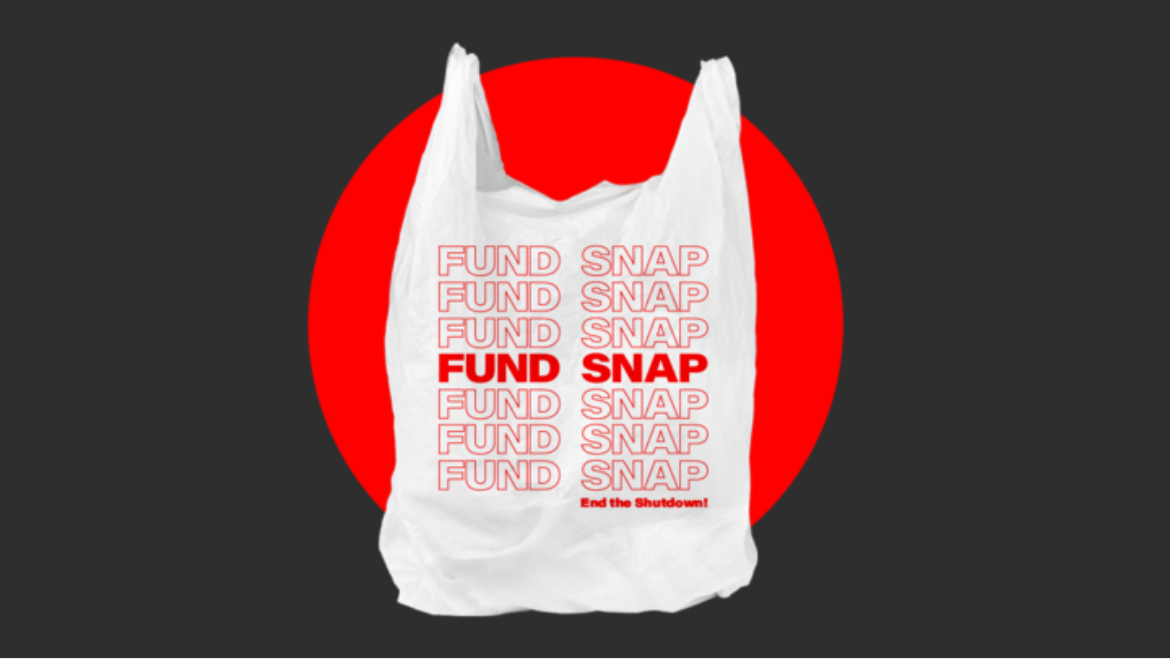
The Big Ugly Bill Is Making Families Go Hungry
In a 2026 poll released by the National Women’s Law Center, 68% of adults said they are worried about being able to afford groceries and food. This amounts to millions of women and families across the country who are struggling to put food on the table; many are only one lost shift or unexpected expense away from going hungry. That’s why federally funded programs like the Supplemental Nutrition Assistance Program (SNAP) are so important.
As of 2024, SNAP helped nearly 42 million people in over 22 million households afford groceries each month. Recipients access their monthly benefits via an Electronic Benefits Transfer (EBT) card, like a debit card, which can be used at authorized stores to purchase food. Benefits average just $6 per person, per day.
Because women—especially women of color—are particularly likely to face caregiving responsibilities, low wages, and economic barriers caused by gender and racial inequality, they also face a higher risk of poverty and food insecurity. As a result, SNAP is especially important for women and the families who depend on them: In 2024, nearly 15.1 million adult women used SNAP to help pay for groceries, including over 8.6 million women of color.1
But today, the Trump-Vance administration and congressional Republicans are attacking SNAP and the people who need it. Last July, President Trump signed the One Big Beautiful Bill Act (OBBBA) into law. OBBBA is actually a Big, Ugly Bill: It makes the largest cut to SNAP in the program’s history, all to fund massive tax breaks for billionaires and large corporations. Since OBBBA was enacted, more than 3.5 million people have already lost SNAP benefits. Unless policymakers act to reverse course, the billionaire class will keep robbing us—enjoying trillions in new tax cuts while more women and families lose the SNAP benefits they need to afford food and stay afloat.
SNAP is a critical anti-poverty program that helps women feed their families.
SNAP serves a diverse group of adults, children, and families. Women, people of color, people with disabilities, and LGBTQIA+ people are especially likely to participate in SNAP.
- Women are the majority (58%) of adult SNAP recipients, and about one in three (33%) adult SNAP recipients is a woman of color.2
- More than one in five adult SNAP recipients (21%) are older adults (age 65 and over).3
- More than six in ten SNAP participants live in families with children. In 2024, two-thirds (67%) of SNAP households with children were headed by a single adult; of those adults, 86% were single moms.4
- About one in four SNAP recipients report having a disability, compared with about one in nine non-recipients.
- Roughly 15% of LGBT adults—nearly 2.1 million people, including 250,000 transgender individuals and 1.3 million lesbian and bisexual women—rely on SNAP.
- SNAP moved nearly 3.6 million people out of poverty in 2024, including nearly 1.4 million adult women and over 1.4 million children.5
Nutrition assistance has far-reaching benefits for the people who receive it: For example, studies have shown that SNAP participants are more likely to report excellent or very good health than nonparticipants with low incomes. Early access to SNAP among pregnant mothers and in early childhood improves birth outcomes and long-term health.
The Trump-Vance administration is slashing SNAP—and millions of people will go hungry as a result.
Trump recently boasted that he “lifted 2.4 million Americans, a record, off of food stamps,” but the truth is that these Americans were not “lifted” off food assistance—they were kicked off the program so Trump could deliver huge tax breaks to his billionaire friends.
OBBBA slashes federal SNAP spending by an estimated $186 billion over the next 10 years (about 20% of the program’s total funding). Every family that depends on SNAP will feel some impact from these cuts by the time they are fully implemented, because OBBBA made changes to the benefits calculation that will prevent SNAP from keeping pace with the rising cost of food. And about four million people will see major cuts to their SNAP benefits—or lose them altogether.
Here’s how this big, ugly law shifts costs and restricts eligibility in ways that make it harder for families to afford groceries each month:
- OBBBA makes states pay more for SNAP (so billionaires can pay less in taxes). Historically, the federal government has always covered the cost of SNAP food benefits and split the administrative costs of running the program 50-50 with the states. But OBBBA cut billions in federal funding for SNAP and requires states to fill the gap: Beginning this year, states will have to pay a higher share of administrative costs—and starting in 2027, states will have to pay for a share of the food benefits, too.
- The specific share of SNAP benefits that each state will have to cover will depend on its “error rate”—a technical measure of how accurately eligibility and benefit amounts are calculated. Though this might sound like a technicality, it will have a huge impact: Most states will end up paying for 5% to 15% of benefits, which will double or triple the amount that states typically spend on SNAP today.
- To offset these massive new costs, many states will likely make cuts that harm the women and families who depend on SNAP the most—by cutting other essential programs, restricting access to SNAP, or ending their SNAP programs altogether. The nonpartisan Congressional Budget Office (CBO) estimates that between 2028 and 2034, states will reduce or eliminate SNAP benefits for about 300,000 people in a typical month in response to this cost shift.
- OBBBA increases ineffective work reporting requirements that often force people off SNAP due to red tape, not ineligibility. Most non-elderly adult SNAP recipients who can work, do work. Nonetheless, even before OBBBA, SNAP rules required most non-disabled adults ages 18 to 54 to prove that they were working, volunteering, or in training at least 20 hours per week to remain eligible for the program; caregivers for children under 18 and certain other groups were exempt. Research consistently shows that these work reporting rules do not increase employment or wages—they simply cause people to lose food assistance, often because they have trouble meeting the burdensome paperwork requirements or work in service-sector jobs with unpredictable hours.
- SNAP work reporting requirements historically have been used to humiliate and demonize women and people of color, especially Black women, for accessing public benefits. They are rooted in the dangerous lie that people experiencing poverty not only don’t work, but don’t want to work.
- OBBBA expanded SNAP’s harsh and ineffective work reporting requirements by applying them to adults up to age 64 and caregivers for children 14 years old and older. It also removed prior exemptions for veterans, youth who have aged out of foster care, and people experiencing homelessness.
- that about 2.4 million people newly subject to the requirements will be cut off SNAP in a typical month.
- OBBBA eliminates SNAP eligibility for many lawfully present immigrants, including refugees, people granted asylum, and certain survivors of domestic violence or sex trafficking. These changes cut off food assistance for individuals who are legally in the United States and often rebuilding their lives after trauma.
OBBBA’s SNAP Cuts Are Already Harming Families
New SNAP work reporting requirements are currently in effect, and states are already making additional cuts to align with OBBBA’s demands. Across the country, families and communities are suffering as a result:
- USDA data show over 3.5 million fewer people participated in SNAP in February 2026 compared to July 2025. In Arizona, nearly half the state’s SNAP recipients—more than 433,000 people—have lost benefits, due not only to new eligibility restrictions but also to paperwork hurdles and agency staff cuts.
- Food pantries across the country can’t keep up with demand as families lose the lifeline SNAP has provided.
- The Center for American Progress estimates that nearly 70,000 avoidable deaths could result by 2040 from the work requirement expansions alone, as more people lose assistance and go hungry.
Beyond OBBBA, the Trump-Vance administration is using new regulations to make it even harder for families to get and keep the food assistance they need. While the administration likes to make baseless claims of “fraud” to justify new attacks on SNAP, these measures do nothing to strengthen the program; they simply punish people who need help affording groceries. For example:
- The U.S. Department of Agriculture (USDA), which runs SNAP, has threatened to withhold SNAP funding from states that refuse to share personal information about SNAP participants with the federal government—information that USDA will likely use to support the administration’s brutal immigration enforcement tactics. Although courts have halted this order for now, some states have already handed over sensitive data.
- The administration has also allowed states to restrict what SNAP recipients can buy with their benefits. Barring the purchase of items like soda and sweets only increases stigma and limits personal choices for SNAP participants—and does nothing to make healthy food more accessible and affordable.
- The administration reportedly plans to end broad-based categorical eligibility (BBCE), which allows states to extend SNAP eligibility to low-income families who already qualify for other benefits. About 6 million people, including more than 1.8 million children, will lose SNAP assistance if BBCE is eliminated.
The Trump-Vance administration is weaponizing SNAP—but policymakers can fight for families.
SNAP keeps women, children and families fed, but the administration’s cuts are leaving people hungry and stressing communities. To stop further harm, Congress must—at minimum—immediately delay the SNAP cost shifts to states and resist efforts to make even more cuts and restrictions based on unsubstantiated and deeply politicized claims of fraud. State lawmakers should look to raise revenues from wealthy individuals and corporations to fill SNAP funding gaps rather than cutting vital programs. And ultimately, our federal policymakers must reverse OBBBA’s SNAP cuts and ensure that billionaires and corporations pay their fair share, so we can invest in women, families, and our communities.
- These figures represent women who report that they or someone in their households receives SNAP. Figures are for 2024. NWLC calculations based on 2025 U.S. Census Bureau Current Population Survey Annual Social and Economic Supplement (ASEC) via IPUMS CPS, University of Minnesota, www.ipums.org. Adult women refers to those 18 or older. Women of color include all women who are not white, non-Hispanic.
- Ibid.
- NWLC calculations using 2025 U.S. Census Bureau Current Population Survey via IPUMS CPS, University of Minnesota, www.ipums.org. Non-elderly women include those age 18 to 64.
- SNAP households indicate those households in which one or more persons receives SNAP benefits. NWLC calculation using 2025 U.S. Census Bureau Current Population Survey Annual Social and Economic Supplement (ASEC) via IPUMS CPS, University of Minnesota, www.ipums.org. Single adults are those who are separated, divorced, widowed, or never married.
- This data is based on the Census Bureau’s Supplemental Poverty Measure, which accounts for the value of both cash and non-cash benefits as well as necessary expenses when calculating poverty. Figures are for 2024. NWLC calculations using 2025 Current Population Survey Annual Social and Economic Supplement (ASEC) public use microdata, https://www.census.gov/programs-surveys/cps.html.