
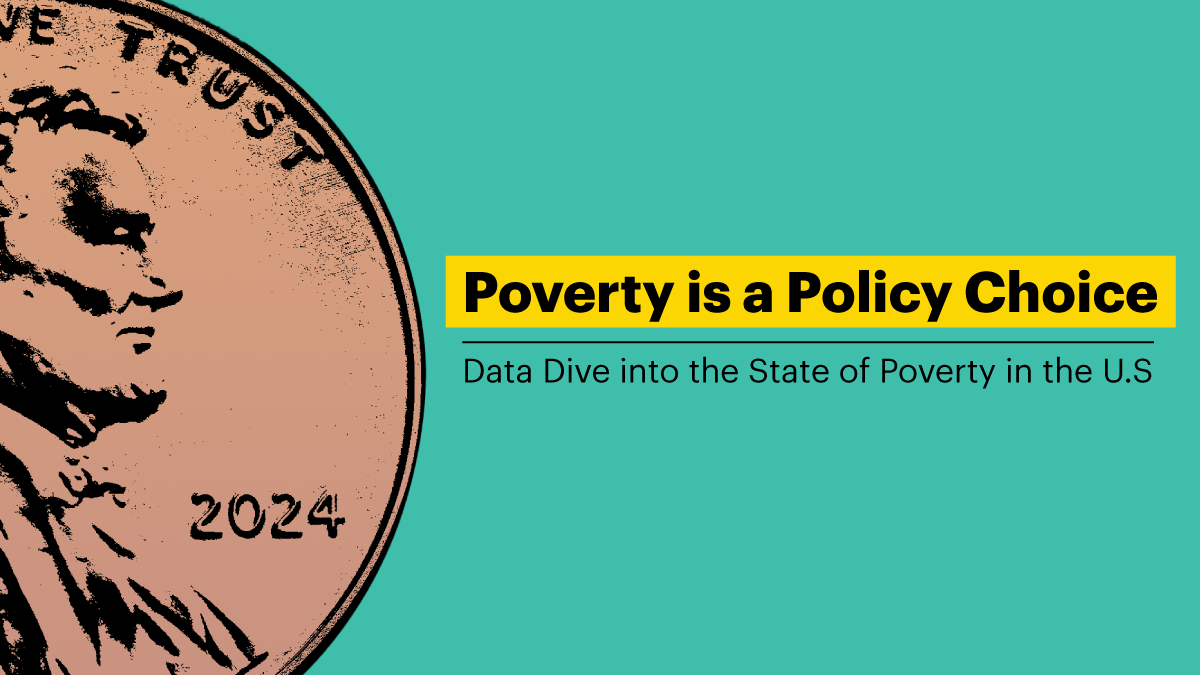
Between 2020 and 2021, poverty rates as measured by the Census Bureau’s Supplemental Poverty Measure (SPM) fell dramatically—even in the midst of a pandemic wreaking havoc on the U.S. economy—because lawmakers chose to expand the Child Tax Credit, strengthen unemployment protections, and more. However, between 2021 and 2022, as pandemic-era assistance expired, poverty rates jumped by the largest recorded single-year increase in more than 50 years. Poverty rates have remained elevated since then, in the absence of additional policy action.
The Census Bureau’s SPM poverty data show that poverty in 2024 remained high after 2022’s surge among women and children, following the end of pandemic relief programs. Despite a strong labor market for most workers in 2024, the SPM poverty rates not only held steady across demographic groups but increased among Black women (from 18.9% to 21.2%) and women aged 65 and over (from 15.0% to 16.2%) between 2023 and 2024.
In addition, data shows that nearly two in five (39.2%) working-age women (16 to 64) who were in SPM poverty worked for pay in 2024, underscoring that for many women—who are overrepresented in low-paying jobs—work alone is not enough to escape poverty. Data further shows that many women in poverty could not engage in paid work due to caregiving responsibilities, illness, and/or disability.
Findings from this fact sheet are a stark reminder that many women and families struggle to make ends meet in our economy, given ongoing systemic inequities and rising costs of living. The recent tax and budget bill’s cuts to programs and services that women and families rely on—like Medicaid and nutrition assistance—will only increase hardship and exacerbate disparities.