



The National Women’s Law Center fights for gender justice—in the courts, in public policy, and in our society.
The Oscars Forgot Women Filmmakers But We Haven’t: Here Are Six Women-Directed Movies That Speak to This Moment
Authors

The Oscars Forgot Women Filmmakers But We Haven’t: Here Are Six Women-Directed Movies That Speak to This Moment
Last week, Oscar nominations were announced, and while there are many wonderful films and filmmakers on the list (I strongly recommend all the International Feature Film nominees), there’s a distinct lack of…women. In the major categories of Best Picture, Best Director, and Best Screenplay, there’s only one woman-directed movie represented (Hamnet dir. Chloé Zhao). This is unfortunately typical—in the Academy Awards’ almost 100-year history, only three women have ever won Best Director. But it feels especially egregious after the year of Project 2025, when women’s struggles and stories mattered more than ever.
Fortunately, women filmmakers exist whether the Academy recognizes them or not. And last year’s crop of women-directed films was especially resonant for the current moment—speaking to maternal isolation, impossible beauty standards, deeply entrenched misogyny, and of course, entitled white men.
Here are five (well, really six) women-directed 2025 releases that I highly recommend seeking out.
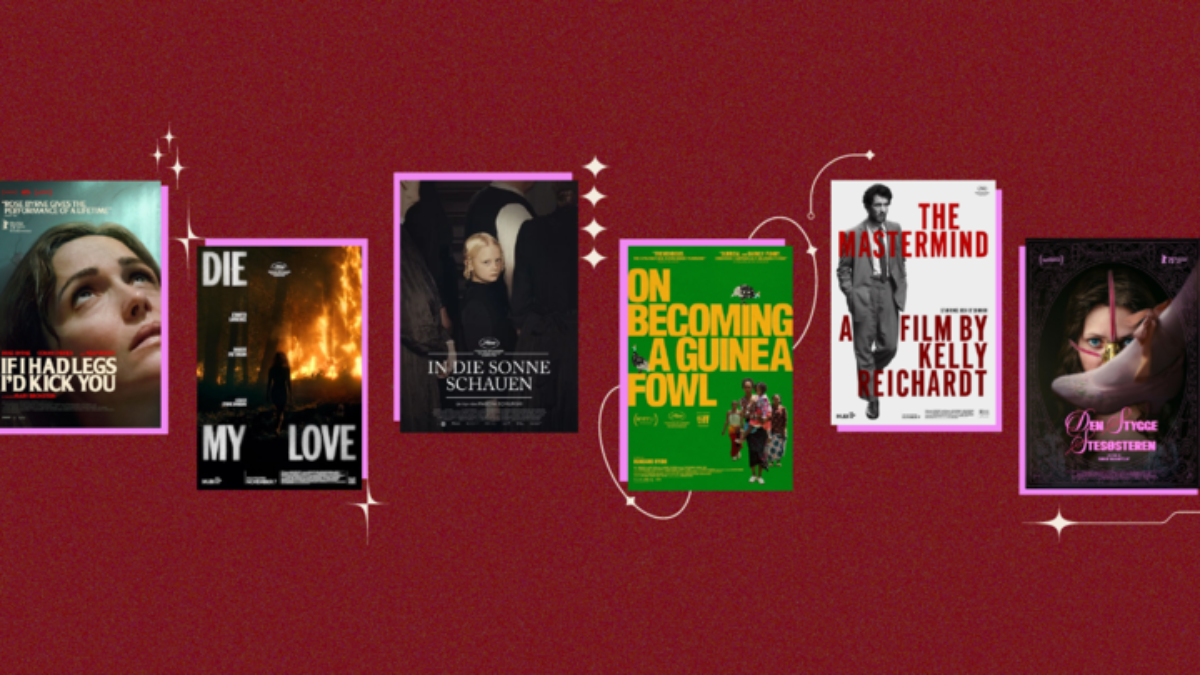
1. Die My Love (dir. Lynne Ramsay) & If I Had Legs, I’d Kick You (dir. Mary Bronstein)
I’m cheating a bit, talking about these two together. But both movies, led by powerhouse performances from two outstanding actresses, are nerve-jangling immersions into the psyches of isolated mothers on the edge of a breakdown. In Die My Love, Jennifer Lawrence is stranded in a rural area with an infant and is in a volatile relationship. In If I Had Legs I’d Kick You, Rose Byrne (in an Oscar-nominated performance!) tries to care for her chronically ill child while contending with a hilariously escalating list of minor (and major) emergencies. Like so many women, neither have the support they need, from their emotionally (and often physically) absent partners to the general indifference of a society that—despite its increasingly pro-natalist focus on increasing births—leaves struggling mothers to fend for themselves. As Jennifer Lawrence says at one point: “I don’t have a problem attaching to my son. It’s everything else that’s fucked.”
Die My Love streaming on Mubi; If I Had Legs, I’d Kick You available to rent on Amazon Prime
2. The Mastermind (dir. Kelly Reichardt)
In what could be alternatively titled A Mediocre White Man’s Delusions of Grandeur, The Mastermind is about a family man (Josh O’Connor) who thinks he’s in a sleek, wish-fulfillment heist movie, when he’s actually in a naturalistic dark comedy about the consequences of one’s actions. Placed against the backdrop of the 1960s Civil Rights Movement, O’Connor’s decision to steal several paintings from the local art museum—with no thought to how it might impact the museum, his community, or his family—is almost painfully topical. Aren’t we all, at this political moment, at the destructive whims of entitled, selfish men? Unfortunately, our current reality isn’t being directed by Kelly Reichardt, who unravels her pathetic leading man slowly and methodically while giving the women in his life platform to express their righteous disgust (look out for a great turn from Gaby Hoffmann).
Streaming on Mubi
3. The Ugly Stepsister (dir. Emilie Blichfeldt)
The self-destructive pursuit of beauty is a common horror trope, and for good reason: with social media algorithms pushing increasingly niche and impossible standards of female beauty, how far-fetched is it that someone might, say, take a self-splitting substance or start turning into a swan to achieve some elusive version of perfection? Oscar-nominated for Makeup & Hairstyling, Emilie Blichfeldt’s stylish and darkly funny debut adapts the Grimms’ Fairy Tale version of Cinderella (with all the self-mutilation Disney left out), centering one of the ugly stepsisters and her pursuit to win the prince’s affection through any means necessary. But while The Ugly Stepsister is just as gnarly as other movies in this genre (there’s a tapeworm scene I won’t be forgetting anytime soon), it also has real empathy for the women in its story and recognizes that no matter how far you go down the road toward self-annihilation, you can always step off it.
Streaming on Hulu (in Norwegian with subtitles)
4. Sound of Falling (dir. Mascha Schilinski)
The most arthouse-with-a-capital-A movie on this list, Sound of Falling is about four generations of girls living in the same German farmhouse, as they contend with the horrors of girlhood, big and small: mean sisters and sexual abuse, forced marriages and unreciprocated crushes. But even that probably overstates its plot: this is mostly a collection of slippery, almost ghostly, scenes, sliding back and force across time with very little context and hard-to-determine connections. For example, the film might jump, from one scene to the next, from a young girl in the 19th century discovering her doppelganger in a post-mortem photograph, to a little girl in the present day fantasizing about drowning in a river. Confusing, frustrating, but also gorgeous and deeply rewarding, the movie captures, better than any other piece of art I’ve experienced, the atmospheric dread of growing up as a girl in times and places where a girl is the worst, most vulnerable thing you can be.
Available in limited theaters (in German with subtitles)
5. On Becoming a Guinea Fowl (dir. Rungano Nyoni)
After returning to her hometown in Zambia, a woman discovers her uncle’s dead body in the road—a man who not only sexually abused her, but also many other young female relatives. What follows, in this furious, moving, and often-funny drama from Zambian-Welsh director Rungano Nyoni, is a potent examination of a family and culture that sacrifices the well-being of its young women to maintain patriarchal power: the way the older women of the family help hush up the dead man’s abuse; the way the man’s young bride is blamed and ostracized for a death she had nothing to do with; the way the victims of the deceased are expected to enthusiastically participate in elaborate funeral rituals for their abuser. Like so many corrupt systems, this cycle of abuse and misogyny feels too deeply entrenched, too broken, too rotten to the core, to ever possibly change. And so, the movie’s ending (which I won’t spoil here) breaks through like a revelation: all the victims’ fury and determination and love for each other concentrated into one piercing note of hope.
Streaming on Hulu (in Bemba and English with subtitles)