





The National Women’s Law Center fights for gender justice—in the courts, in public policy, and in our society.
Warning Signs: State Child Care Assistance Policies 2025
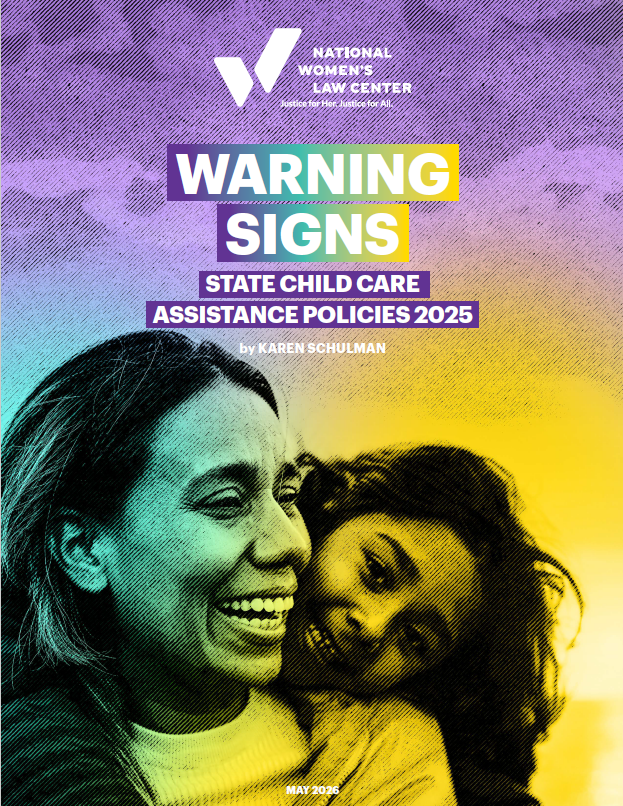
Warning Signs: State Child Care Assistance Policies 2025
Child care is essential for the well-being of parents, children, and our nation. It enables parents to work and support their families or obtain education or training to get a better, more stable job. It offers children with a safe, nurturing environment to learn and develop skills they need to succeed in school and in life. By bolstering the current and future workforce, it strengthens our nation’s economy. Yet, persistent underfunding has left our child care system vulnerable and left children, families, and early educators without the support they need.
Many families, particularly low-income families, struggle with the high price of child care. At the same time, child care workers—who are predominantly women and disproportionately women of color—are paid poverty-level wages. To help families afford the reliable child care they want for their children, expand the supply of child care options that meet families’ varied needs, and improve child care teachers’ compensation, it is necessary to greatly expand public investment in child care.
The Child Care and Development Block Grant (CCDBG), the major federal child care assistance program, provides some help for families needing child care and for child care programs and early educators. However, due to inadequate funding, there are significant gaps in child care assistance policies, which are set by states within federal parameters. To assess the status of state child care assistance policies—where the gaps are, where progress is being made, and where further progress is needed—this report examines states’ policies in five key areas, including:
- Income eligibility limits to qualify for child care assistance;
- Waiting lists for child care assistance;
- Copayments required of parents receiving child care assistance;
- Payment rates for child care providers serving families receiving child care assistance; and
- Eligibility for child care assistance for parents searching for a job.
This analysis of child care assistance policies as of February 2025 offers warning signs—while a few states made notable strides forward on their policies, a number of states have taken steps backward, and many states have made little or no progress in addressing the gaps in their policies. Continuing and growing gaps in child care assistance policies stem in part from the expiration of temporary CCDBG supplemental funding in September 2024. Child care assistance programs could be further jeopardized in coming years as states feel the full impact of federal funding cuts to Medicaid and the Supplemental Nutrition Assistance Program (SNAP) included in the 2025 budget reconciliation law, leaving states with fewer resources to devote to child care to supplement federal child care funding.
If there are cuts to federal and state funding for child care rather than the substantial increase that is needed, more low- and moderate-income families will be unable to qualify for child care assistance due to increasingly restrictive income limits, more eligible families will be denied help due to growing waiting lists for assistance, families will be burdened with rising copayments, and child care programs will find it even harder to adequately compensate their teachers or stay in business due to payment rates that fall ever further behind the cost of providing care.